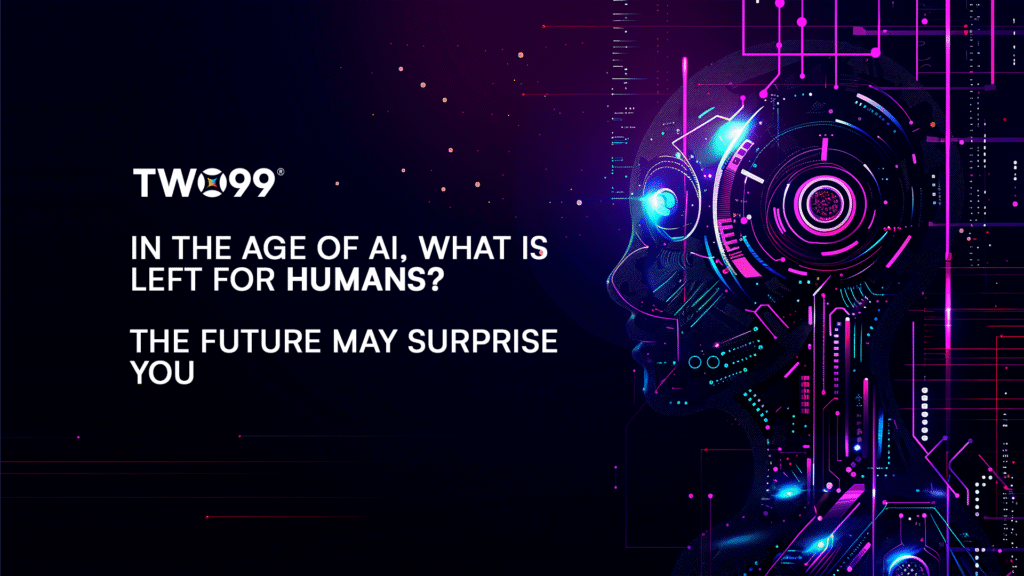
We are living in a time that feels as if it has been pulled from the pages of science fiction. Artificial intelligence (AI) is no longer a futuristic concept. It is now embedded in our smartphones, powering our social media feeds, recommending what to watch next, and even assisting doctors in diagnosing diseases. As AI continues to evolve at an unprecedented pace, a pressing question has emerged: In the age of AI, what is left for humans?
This question generates excitement for some and anxiety for many. However, the answer is not as bleak as it may seem. In fact, the relationship between AI and the future of humanity could be more collaborative and more hopeful than we might expect.
Understanding AI and the Future of Automation
One of the most visible impacts of AI today is its role in automation. Machines have already replaced repetitive, rule-based tasks in industries such as manufacturing, logistics, and customer service. Now, with the help of machine learning and advanced algorithms, AI is also stepping into cognitive domains such as data analysis, financial forecasting, legal research, and even software development.
These advancements have led to concerns about widespread job displacement. Some studies estimate that up to 45 percent of current jobs could be automated with the technologies we already have. This naturally raises the question of what opportunities will remain for human workers in the near future.
Rather than trying to compete with machines, the more sustainable solution lies in learning how to complement them.

Shaping a Human-AI Collaboration
Instead of viewing AI as a threat to employment, it is more productive to see it as a powerful tool that can enhance human capabilities. In many sectors, the most valuable workers will be those who understand how to collaborate effectively with AI.
Take healthcare, for example. AI can analyze medical scans with remarkable accuracy and identify abnormalities that might be missed by the human eye. However, the role of a doctor goes far beyond diagnostics. Physicians must communicate with patients, assess complex symptoms, make ethical decisions, and provide emotional support. These are human attributes that no machine can replicate.
A similar dynamic can be observed in journalism. While AI can generate news summaries or basic reports, the art of investigative journalism, in-depth storytelling, and audience engagement remains deeply human.
This evolving relationship reflects a broader truth about AI and the future of work. The workplace is changing, but it is not disappearing. Instead of focusing on tasks that can be automated, we must direct our energy toward roles that require emotional intelligence, strategic thinking, and creativity.
The Skills That Will Define Human Relevance
To stay valuable in the age of AI and our future, people must build skills that machines cannot easily copy. These skills will define our relevance and ability to thrive in a technology-driven world.
Creativity
Although AI can generate music, write content, and even produce visual art, true creativity involves original thought, abstract reasoning, and innovation. These traits remain uniquely human. Fields such as design, product development, and the arts will continue to rely heavily on creative professionals.
Emotional Intelligence
Empathy, communication, and the ability to navigate social dynamics are essential in professions like education, mental health counseling, conflict resolution, and leadership. Machines can process information, but they cannot understand or respond to human emotions in a deeply meaningful way.
Complex Problem-Solving
AI can recognize patterns and analyze data, but it often lacks the ability to apply context or moral judgment to complex issues. Humans will continue to play a central role in decision-making, conflict mediation, and policy development.
Adaptability
As technologies evolve, so too will industries and job requirements. Individuals who are flexible, eager to learn, and open to change will have a clear advantage. The ability to pivot, reskill, and stay ahead of trends is now a critical career asset.
A Shift Toward Human-Centric Roles
As automation handles more technical and repetitive tasks, we are seeing a rise in roles that emphasize human connection and insight. User experience designers, AI ethicists, employee wellness advocates, and corporate culture consultants are just a few examples of emerging professions that highlight this trend.
Even in industries that are heavily automated, companies are placing greater emphasis on roles that ensure technology serves human needs. These positions often focus on empathy, ethics, and holistic thinking rather than technical output.
This shift reinforces the idea that AI and the future of automation do not spell the end of human contribution. Instead, they invite a more thoughtful distribution of labor, allowing people to focus on the most meaningful and impactful aspects of their work.
Co-Creating the Future of AI
The future of AI is not set in stone. It will be shaped by the values, intentions, and regulations that we, as a global community, choose to prioritize. Rather than being passive observers, we are active participants in this technological revolution.
To guide AI development in a direction that benefits society as a whole, we must include diverse voices in the conversation. Artists, educators, psychologists, ethicists, and community leaders all have critical insights to contribute. With broader participation, we can build systems that reflect collective values rather than narrow technical goals.
Policymakers and business leaders also have an essential role to play. They must invest in education and retraining programs, promote equitable access to technology, and ensure that the gains from AI are distributed fairly. AI and the future can only be sustainable if it is inclusive and human-centered.
What Remains for Humans Is Profoundly Valuable
So, what is left for humans in the age of AI? The answer is simple but powerful. What remains is the essence of who we are. We retain the ability to connect, to care, to create, to imagine, and to lead.
Rather than eliminating human value, AI can elevate it. By removing mundane tasks, AI gives us more space to focus on what truly matters. This includes solving complex social issues, nurturing relationships, building communities, and pursuing higher-order goals that give life meaning.
The future of work is not a competition between humans and machines. It is a new kind of partnership where technology supports human potential rather than replacing it.
Conclusion
In the age of AI and our human future, we must adopt a mindset of possibility rather than fear. By embracing change, investing in human skills, and guiding the ethical development of technology, we can ensure that AI becomes a force for empowerment rather than displacement.
AI and the future will not leave humans behind. Instead, they will challenge us to rise, evolve, and rediscover the very qualities that make us human. The future may indeed surprise us, but in all the right ways.
Key Takeaways
AI is no longer futuristic; it is already integrated into everyday life.
Automation is expanding into cognitive domains, increasing concerns about job displacement.
Humans should focus on complementing AI rather than competing with it.
Human-AI collaboration is the future, especially in fields like healthcare, journalism, and education.