Introduction
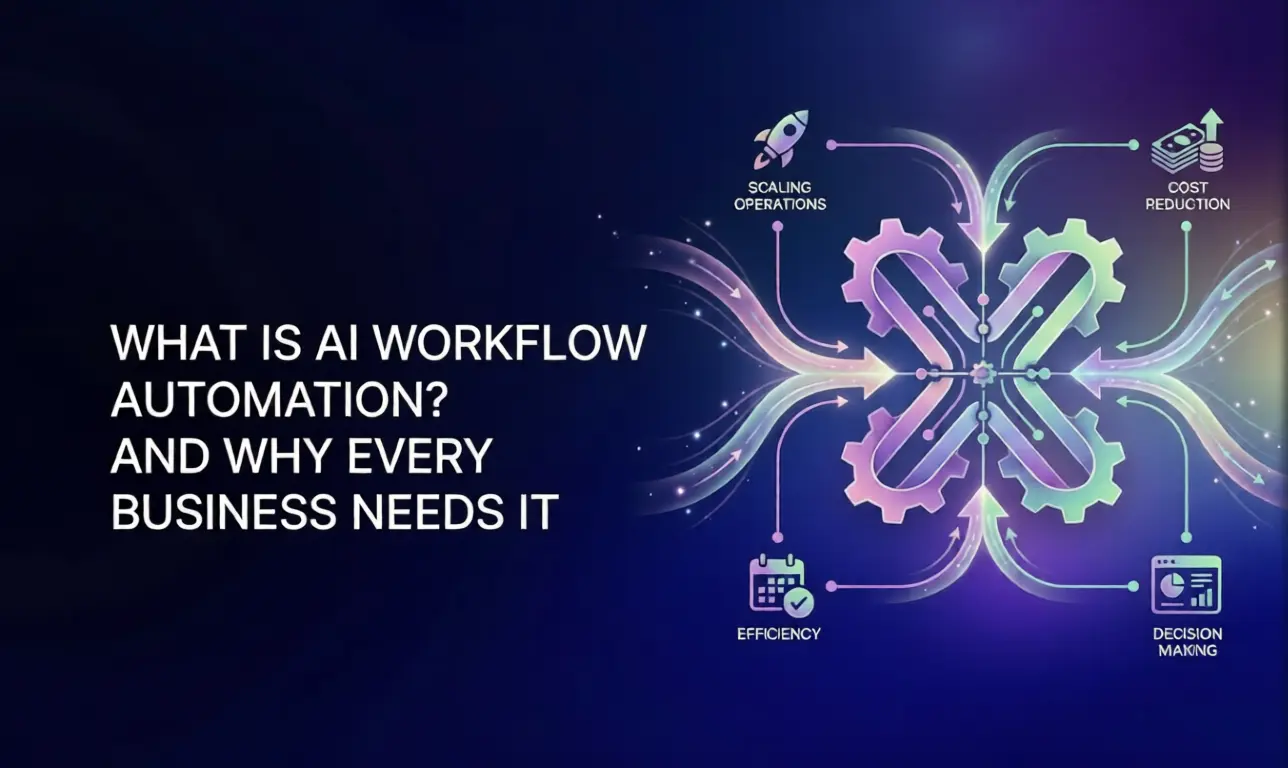
In today’s fast-paced digital world, businesses are constantly looking for ways to improve efficiency, reduce costs, and stay competitive. This is where AI Workflow Automation comes into play. It goes beyond traditional automation by using artificial intelligence to handle complex tasks, make decisions, and continuously improve processes over time.
Simply put, AI Workflow Automation helps businesses automate repetitive and time-consuming tasks while allowing employees to focus on more strategic work. Whether it’s managing customer queries, processing data, or optimizing operations, AI is transforming how organizations function.
What Is AI Workflow Automation?
AI Workflow Automation is the use of artificial intelligence technologies — such as machine learning, natural language processing, and data analytics- to automate business workflows. Unlike traditional automation, which follows fixed rules, AI-driven systems can learn from data, adapt to new situations, and make intelligent decisions.
Traditional system: Sends a confirmation email after a form submission.
AI-powered system: Analyzes the user’s behavior, personalizes the message, and predicts future actions.
This level of intelligence makes AI Workflow Automation far more powerful and valuable for modern businesses.
How AI Workflow Automation Works
AI Workflow Automation typically follows a structured process:
- Data Collection – Gathering data from multiple sources such as emails, CRM systems, or applications.
- Data Analysis – AI analyzes patterns, trends, and user behavior.
- Decision Making – Based on insights, AI makes informed decisions.
- Task Execution – Automated actions are performed without human intervention.
- Continuous Learning – The system improves over time using machine learning.
Companies like Two99 are helping businesses implement AI Workflow Automation solutions that streamline operations and improve productivity with minimal manual effort.
Why Every Business Needs AI Workflow Automation
1. Saves Time and Boosts Productivity
Manual tasks such as data entry, report generation, and email responses consume valuable time. AI Workflow Automation eliminates these repetitive processes, allowing teams to focus on high-value activities.
2. Reduces Human Errors
Humans are prone to mistakes, especially when performing repetitive tasks. AI systems follow precise logic and continuously learn, reducing the chances of errors significantly.
3. Improves Decision-Making
AI analyzes large volumes of data quickly and provides actionable insights. Businesses can make faster and smarter decisions based on real-time data.
4. Enhances Customer Experience
AI-powered chatbots and automated workflows can respond instantly to customer queries, provide personalized recommendations, and ensure consistent service.
5. Scales Business Operations
As businesses grow, managing operations manually becomes difficult. AI Workflow Automation allows companies to scale without increasing operational costs proportionally.
6. Cost Efficiency
By automating repetitive tasks, businesses can reduce labor costs and improve overall efficiency. This leads to better resource utilization and higher profitability.
Key Benefits of AI Workflow Automation
Here are some important benefits businesses can expect:
- Faster process execution
- Better accuracy & consistency
- Improved team productivity
- Real-time analytics & insights
- Reduced operational costs
- Enhanced customer satisfaction
Common Use Cases of AI Workflow Automation
Customer Support
AI chatbots handle queries, resolve issues, and provide 24/7 support without human intervention.
Marketing Automation
AI tools analyze customer behavior, automate email campaigns, and optimize marketing strategies.
HR & Recruitment
AI can screen resumes, schedule interviews, and even predict candidate suitability.
Finance & Accounting
Automated invoicing, fraud detection, and expense tracking streamline financial operations.
Sales Processes
AI helps in lead scoring, follow-ups, and predicting customer buying behavior.
Challenges to Consider
While AI Workflow Automation offers many advantages, businesses should also be aware of certain challenges:
- Initial implementation cost
- Data privacy concerns
- Need for skilled professionals
- Integration with existing systems
However, with the right strategy and support from providers like Two99, these challenges can be effectively managed.
Tips to Implement AI Workflow Automation Successfully
- Start with simple workflows and scale gradually
- Identify repetitive and time-consuming tasks
- Ensure data quality for better AI performance
- Train employees to work alongside AI systems
- Choose the right technology partner
The Future of AI Workflow Automation
AI Workflow Automation is not just a trend; it is the future of business operations. As AI technology continues to evolve, businesses will experience even more advanced automation capabilities, including predictive analytics, intelligent decision-making, and fully autonomous workflows.
Organizations that adopt AI early will gain a significant competitive advantage. They will be more agile, efficient, and better equipped to handle market changes.
Conclusion
AI Workflow Automation is transforming the way businesses operate by making processes smarter, faster, and more efficient. From reducing manual effort to improving customer experiences, the benefits are undeniable.
In a competitive business environment, adopting AI Workflow Automation is no longer optional; it is essential. Companies like Two99 are playing a key role in helping businesses embrace this transformation and unlock new growth opportunities.
By investing in AI today, businesses can build a more productive, scalable, and future-ready organization.