Artificial intelligence is quickly becoming part of everyday work. Professionals across industries are beginning to rely on AI tools to write content, analyze documents, assist with coding, and automate repetitive tasks. As these technologies mature, organizations are increasingly searching for AI systems that are powerful but also reliable and safe to use.
One platform that has gained significant attention in this space is Anthropic AI, the company behind the advanced AI assistant Claude. While many people recognize Claude as a conversational chatbot, its capabilities extend far beyond simple question-and-answer interactions. The Anthropic AI platform is designed to support complex workflows, enterprise automation, research analysis, and software development.
For businesses and developers exploring AI adoption, understanding how to actually use Anthropic AI is essential. Claude AI can act as a productivity assistant, a coding partner, a document analysis engine, or even the foundation of intelligent software systems. When integrated correctly, it has the potential to transform how teams interact with information and complete knowledge-based tasks.
This guide explores how individuals, developers, and organizations can use Anthropic AI and Claude AI in real-world scenarios, how the platform works, and how its capabilities can be applied to everyday professional workflows.
Understanding the Anthropic AI Platform
Before exploring practical use cases, it helps to understand how the Anthropic AI platform is structured. Anthropic builds large language models that are capable of understanding and generating natural language. These models power Claude AI, which acts as the interface through which users interact with the system.
Unlike traditional software that follows strict rules and predefined instructions, large language models operate by interpreting context and generating responses based on patterns learned from vast amounts of data. This allows Claude to respond to open-ended questions, analyze complex instructions, and generate long-form explanations.
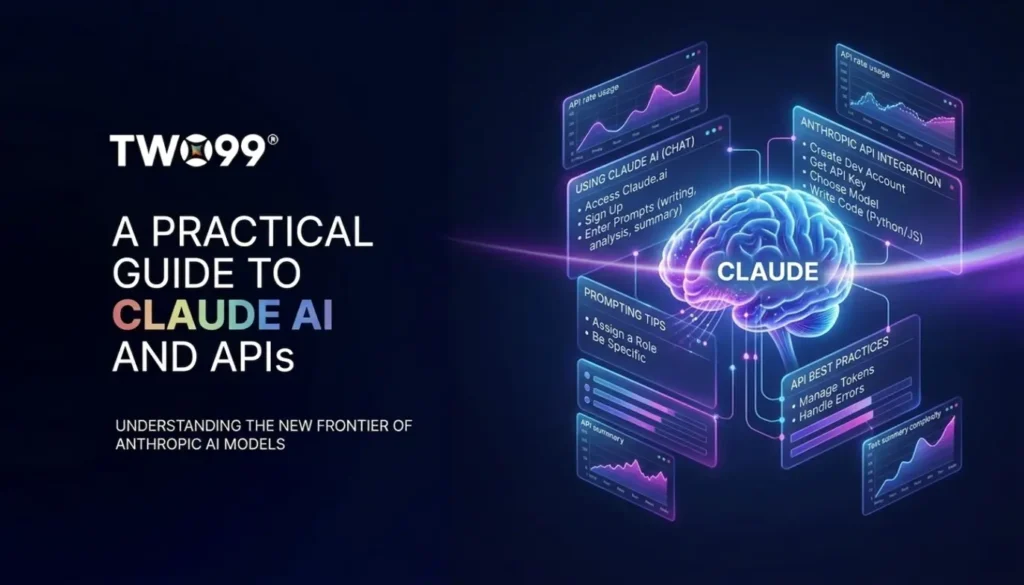
Anthropic’s platform is designed with flexibility in mind. Users can interact with Claude directly through conversational interfaces, but developers can also access the underlying models through APIs. This makes it possible to embed Claude’s capabilities into websites, applications, or internal company tools.
Another important aspect of the platform is its focus on reliability and safety. Anthropic has invested heavily in research that aims to ensure AI systems behave responsibly. This means the models are trained not only to produce useful answers but also to avoid harmful outputs and maintain a helpful, balanced tone.
As a result, the Anthropic AI ecosystem is increasingly being used as a foundation for building intelligent digital products and services.

Getting Started With Claude AI
For many users, the first interaction with Anthropic technology happens through Claude AI, the company’s conversational assistant. Claude is designed to help people perform a wide variety of intellectual tasks that normally require time and concentration.
Users can ask Claude to draft articles, summarize reports, explain complex concepts, or generate ideas for creative projects. The assistant is capable of producing detailed responses that go beyond short answers, often providing structured explanations that help users understand the reasoning behind a response.
One of Claude’s most notable capabilities is its ability to process very large amounts of information at once. Many AI systems struggle when working with long documents or extended conversations. Claude, however, is designed with a large context window that allows it to maintain awareness of earlier information while generating responses.
This means a user can upload a long document, ask questions about specific sections, and receive accurate summaries or insights. Professionals who work with research papers, policy documents, or large datasets often find this capability particularly valuable.
For individuals exploring AI for the first time, Claude can quickly become a powerful digital assistant that helps manage information more efficiently.
Using Anthropic AI for Writing and Knowledge Work
One of the most common ways people use Anthropic AI is for writing and knowledge-based tasks. In many professions, a significant portion of work involves organizing information, writing reports, or communicating ideas clearly.
Claude AI can assist with these activities by generating structured content, summarizing information, and helping users refine their ideas.
For example, a marketing professional might use Claude to generate blog outlines, refine messaging for campaigns, or rewrite product descriptions. Because the AI understands context and tone, it can adapt its writing style depending on the instructions provided.
Researchers and analysts can also benefit from Claude’s ability to process large amounts of text. Instead of manually reviewing hundreds of pages of material, users can provide documents to Claude and ask for summaries, comparisons, or explanations of key themes.
This can significantly reduce the time required to analyze complex information. Rather than replacing human judgment, the AI acts as a tool that accelerates the research process and helps users identify important insights more quickly.
As knowledge work becomes increasingly digital, AI systems like Claude are emerging as valuable partners in information processing.
Claude AI as a Coding Assistant
Another powerful application of Anthropic AI is software development. Developers are increasingly using Claude as an AI coding assistant to help with programming tasks.
Writing and debugging code can often be time-consuming, particularly when dealing with unfamiliar libraries or large projects. Claude can assist developers by explaining code, suggesting improvements, or identifying potential errors in complex systems.
One reason Claude is particularly useful for developers is its ability to process large sections of code at once. Many AI tools struggle when analyzing large codebases, but Claude’s architecture allows it to maintain context across long files and multiple components.
This enables developers to ask detailed questions about how different parts of a system interact. For example, an engineer might ask Claude to review a function and explain how it connects with other modules in the project.
Claude can also generate documentation for software projects. Writing documentation is an important but often neglected task in development workflows. By analyzing code and generating clear explanations, Claude can help teams maintain well-documented systems.
These capabilities make Claude a valuable companion for developers who want to streamline their workflows and focus more on high-level problem solving.
Integrating Anthropic AI Into Applications
While Claude is useful as a standalone assistant, the real power of Anthropic AI emerges when it is integrated into software systems. Developers can connect to the Anthropic API, which allows applications to communicate directly with Claude models.
Through this API, software systems can send prompts to Claude and receive generated responses in real time. This makes it possible to build applications that understand natural language, analyze text, and generate intelligent outputs automatically.
For example, a customer support platform could use Claude to generate suggested responses to user inquiries. Instead of writing replies manually, support teams could review AI-generated drafts and respond more quickly.
Similarly, companies might integrate Claude into internal knowledge systems that allow employees to ask questions about company policies or technical documentation.
Because the platform can be accessed through programming interfaces, developers can build entirely new products that rely on Claude’s reasoning capabilities. This flexibility allows businesses to experiment with innovative applications of AI across different industries.
Building AI Agents With Anthropic AI
One of the most exciting developments in artificial intelligence is the emergence of AI agents, systems capable of performing complex tasks across multiple steps.
Anthropic AI models are well suited for this type of work because they can reason through instructions and maintain context across extended interactions.
An AI agent built using Claude might be able to gather information from several sources, analyze the data, and produce a detailed report. Instead of simply answering a question, the system could perform an entire workflow automatically.
For example, a market research agent could read industry reports, extract key statistics, compare findings, and present a summary explaining the major trends in a particular market.
Similarly, an internal productivity agent could help employees locate relevant documents, summarize project updates, and organize information across different tools.
As the technology evolves, AI agents built on platforms like Anthropic are expected to become an increasingly important part of digital workplaces.
Enterprise Applications of Anthropic AI
Large organizations often deal with enormous volumes of information. Contracts, reports, emails, and policy documents can accumulate quickly, making it difficult for employees to locate relevant insights.
Anthropic AI provides tools that can help organizations process this information more effectively.
For instance, companies may use Claude to analyze customer support interactions and identify recurring issues. This can help businesses improve their products and services by understanding common user concerns.
In legal or compliance departments, Claude could assist with reviewing long documents and highlighting important sections. This can reduce the time required to analyze contracts or regulatory guidelines.
Enterprise adoption of AI is still evolving, but many organizations see platforms like Anthropic as a way to modernize how information flows within their teams.
Research and Data Analysis With Claude
Researchers and analysts are also discovering new ways to use Claude AI in their work. Academic research, policy analysis, and market intelligence often involve reviewing large collections of documents and extracting patterns from complex information.
Claude’s ability to process long documents allows it to act as a research assistant capable of summarizing papers, comparing viewpoints, and explaining complicated theories in simpler language.
For example, a policy researcher might ask Claude to review several reports on economic policy and identify the main arguments presented by different experts.
Similarly, a business analyst could analyze customer reviews and identify recurring themes in consumer feedback.
While human expertise remains essential in interpreting results, Claude can significantly reduce the time required to organize and understand large datasets.
Responsible AI and Safety Considerations
As AI systems become more capable, questions about safety and responsible deployment become increasingly important. Anthropic has built its platform with a strong emphasis on AI alignment and responsible development.
One of the company’s key innovations is the concept of Constitutional AI, a training method that encourages AI systems to follow a set of guiding principles when generating responses.
These principles help the system evaluate its own outputs and avoid producing harmful or misleading information. By embedding safety considerations into the training process, Anthropic aims to ensure that its models remain helpful and reliable.
For organizations adopting AI technologies, these safeguards are particularly important. Businesses want to ensure that AI tools behave predictably and do not generate inappropriate or inaccurate outputs in sensitive contexts.
Anthropic’s commitment to safety research has helped the company build trust among developers, enterprises, and policymakers.
The Future of Anthropic AI in Professional Work
Artificial intelligence is gradually becoming an essential part of modern work. Tasks that once required hours of manual effort can now be completed much faster with the assistance of AI systems.
Platforms like Anthropic AI are helping to redefine how people interact with information, turning AI into a collaborative partner rather than simply a tool.
As Claude models continue to improve, their ability to reason, analyze data, and support complex workflows will likely expand. Businesses may begin relying on AI agents to automate research, manage knowledge systems, and assist employees in making decisions.
For professionals across industries, learning how to use Anthropic AI and Claude AI effectively may soon become an important skill. Just as previous generations learned to use spreadsheets and search engines, the next generation of workers will likely rely on AI assistants to navigate the vast amounts of information available in the digital world.
The future of work may not be about humans competing with AI, but rather about humans collaborating with intelligent systems to achieve better results.
FAQs About Using Anthropic AI and Claude AI
Is Anthropic AI free to use?
Anthropic AI offers both free and paid access depending on how the service is used. Individuals can often access Claude AI through web-based interfaces with limited free usage, which allows them to explore the assistant for tasks such as writing, summarizing documents, or answering questions.
However, businesses and developers who want to integrate Claude into their own applications typically use the Anthropic API, which operates on a usage-based pricing model. In this case, organizations pay based on how much data the AI processes, usually measured in tokens. This flexible pricing allows both individuals and enterprises to use the platform according to their needs.
How to run Anthropic computer use?
Running Anthropic AI tools usually involves accessing Claude through an official interface or integrating the models using the Anthropic API. Developers who want to build applications using Claude can connect their software to Anthropic’s platform and send prompts programmatically.
For example, developers can install the required libraries, connect to the API, and send requests that allow the AI model to generate responses or analyze text. This setup allows Claude to function inside applications such as chat systems, coding assistants, research tools, or document analysis platforms.
For non-technical users, Claude can simply be used through a browser-based interface without requiring any programming knowledge.
Does Anthropic use AI?
Yes, Anthropic is an artificial intelligence company that develops advanced AI models and systems. The company builds large language models capable of understanding and generating human language, which power its main AI assistant known as Claude.
Anthropic also conducts extensive research into AI safety and alignment, focusing on how AI systems can be designed to behave responsibly and remain beneficial to society. This research includes training methods such as Constitutional AI, which helps guide how AI models generate responses.
How are people using Claude AI?
People use Claude AI for a wide range of tasks that involve writing, analysis, and problem-solving. Many professionals use Claude as a productivity assistant that helps them generate ideas, draft reports, summarize long documents, and explain complex topics.
Developers often use Claude as a coding assistant that can review code, identify bugs, and generate programming suggestions. Businesses may integrate Claude into customer support systems or internal knowledge platforms to help employees find information more quickly.
Because the AI can process large amounts of text, it is especially useful for tasks that involve analyzing long documents or organizing large volumes of information.
What can Claude AI help with?
Claude AI can assist with many types of knowledge-based tasks. It can help users write articles, summarize research papers, analyze reports, generate creative ideas, and answer detailed questions across a wide range of topics.
In professional environments, Claude is often used to automate routine tasks such as drafting emails, preparing summaries, or reviewing documents. By handling repetitive cognitive work, the AI allows users to focus on higher-level thinking and decision-making.
Can Claude AI analyze long documents?
Yes, one of Claude AI’s strongest capabilities is its ability to analyze long documents. The system is designed with a large context window, which allows it to process extensive text while maintaining awareness of earlier information.
Users can upload research papers, policy documents, technical manuals, or reports and ask the AI to summarize key insights or explain specific sections. This capability makes Claude particularly valuable for researchers, analysts, and professionals who regularly work with complex documents.
Can developers integrate Claude AI into apps?
Yes, developers can integrate Claude AI into their applications through the Anthropic API. This allows software systems to send prompts to the AI model and receive generated responses programmatically.
With this integration, developers can build AI-powered tools such as automated customer support systems, document analysis platforms, coding assistants, and intelligent chat interfaces. The API allows businesses to incorporate advanced AI capabilities into their products without needing to train their own models.
Is Claude AI good for research?
Claude AI can be a helpful tool for research tasks, especially when dealing with large amounts of written information. Researchers often use the system to summarize articles, compare different viewpoints, and identify key themes across multiple documents.
While AI should not replace expert analysis, it can significantly speed up the process of reviewing large volumes of material and organizing information in a clear and structured way.
Can Claude AI automate business workflows?
Claude AI can assist in automating many knowledge-based workflows within organizations. Businesses can use the AI to categorize documents, generate reports, analyze customer feedback, or assist with internal knowledge management.
By integrating Claude into internal systems, companies can reduce manual work and improve how information flows across teams. This helps employees access insights faster and make more informed decisions.
Is Claude AI safe to use?
Anthropic places a strong emphasis on responsible AI development and safety research. The company trains its models using a method called Constitutional AI, which encourages the system to follow a set of guiding principles when generating responses.
These safeguards help reduce harmful or misleading outputs while ensuring that the AI remains helpful and informative. While no AI system is perfect, Anthropic’s approach is designed to make Claude more reliable and aligned with human values.
Key Takeaways
Claude AI is the main assistant from Anthropic used for writing, coding, research, and document analysis.
The Anthropic API allows developers to integrate Claude into applications, software products, and internal tools.
Claude’s large context window enables it to analyze long documents, codebases, and datasets effectively.
Businesses use Anthropic AI for automation, knowledge management, customer support, and research workflows.
Anthropic emphasizes responsible AI development through safety frameworks like Constitutional AI.