Today, an organic click is harder to earn—and vastly more valuable. According to industry data, nearly 68% of searches end without a single click[cite: 2]. When a user does land on your site, what happens next?
This is where the SEO Blind Spot lies: focusing entirely on getting visitors to the page while ignoring the post-click experience. If your organic traffic bounces, fails to engage, or leaves without taking action, your search engine optimization strategy isn’t driving business growth it’s leaking revenue.
Here is how to bridge the gap between organic traffic and post-click conversions to transform your search strategy into a predictable revenue engine.
1. Why SEO Can No Longer End at the Click
Traditional SEO focused heavily on top-of-funnel (TOFU) vanity metrics. Marketers published high-volume informational content to attract massive traffic, operating under the assumption that sales or lead-gen teams would handle the rest.
However, search landscape dynamics have shifted:
- Zero-Click Searches: Generative AI tools and Google AI Overviews answer basic intent directly on the search engine results page (SERP), reducing generic informational clicks.
- High-Intent Entry Points: Users who do click through are often looking for specific solutions, deep expertise, or direct brand interaction.
- E-E-A-T and User Signals: Post-click engagement signals—such as dwell time, interaction depth, and conversion completion—signal search engine algorithms that your content truly satisfies user intent.
When you treat traffic as the destination rather than the doorway, your content creates high bounce rates and wasted ad spend[cite: 2]. To achieve sustainable organic growth, SEO must align seamlessly with User Experience (UX) and Conversion Rate Optimization (CRO).
2. What Happens When You Fix the Post-Click Experience?
Optimizing for the entire post-click journey changes how your brand performs across search engines and revenue reports.
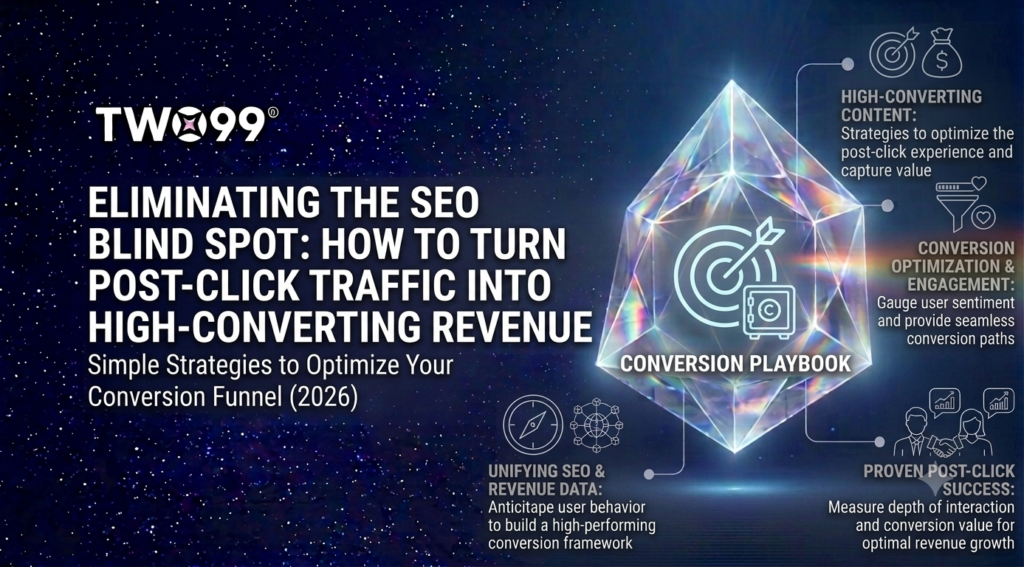
| THE POST-CLICK CONVERSION FLYWHEEL |
+————————————————————————-+
| 1. High-Intent Traffic –> Align search intent with target landing page |
| 2. Engaging Experience –> Reduce friction, increase dwell time |
| 3. Strategic CTAs –> Guide users to contextual next steps |
| 4. Qualified Leads –> Turn organic visitors into measurable revenue|
+————————————————————————-+
When search intent matches on-page user experience:
- Bounce rates drop: Visitors immediately see that their query has been answered accurately and thoroughly.
- Micro-conversions increase: Readers download whitepapers, engage with interactive tools, view pricing pages, or subscribe to newsletters.
- Macro-conversions soar: Qualified leads enter your sales pipeline faster because your content naturally guides them down the funnel.
3. Four Steps to Bridge the SEO & CRO Gap
Step A: Align Search Intent with On-Page Context
Don’t trick users with clickbait titles or generic content. If a user searches for “enterprise technical SEO audit,” the landing page should deliver actionable frameworks and clear service avenues immediately—not 1,500 words of basic history.
Step B: Design Clear, Contextual Call-to-Actions (CTAs)
Generic “Contact Us” buttons at the footer are no longer enough. Your CTAs must reflect where the reader is in their journey:
- TOFU Content: Offer downloadable guides, checklists, or newsletter sign-ups.
- MOFU/BOFU Content: Offer free strategy calls, live demos, or custom site audits.
Step C: Streamline UX and Technical Performance
Sub-second load times, mobile-responsive layouts, intuitive navigation, and clean visual structures prevent immediate drop-offs. If technical bottlenecks hinder user navigation, rankings will suffer alongside conversions.
Step D: Scale Conversion-Engineered Infrastructure
Managing technical SEO, intent mapping, UX design, and conversion funnel optimization in-house can strain agency resources. Integrating specialized solutions ensures every page is optimized for search engines and user conversion goals.
Deploying comprehensive growth strategies through two99.org solutions enables businesses to bridge technical search optimization with end-to-end user conversion paths[cite: 2]. Implementing entity-driven content architecture, CRO-focused page design, and robust analytics frameworks helps transform raw organic impressions into pipeline revenue.
4. Trending Keywords for Post-Click Optimization
Incorporate high-intent search terms into your content strategy:
SEO Conversion Rate Optimization
Search Intent Mapping
Organic Funnel Architecture
User Experience SEO Integration
Digital Performance Marketing Solutions