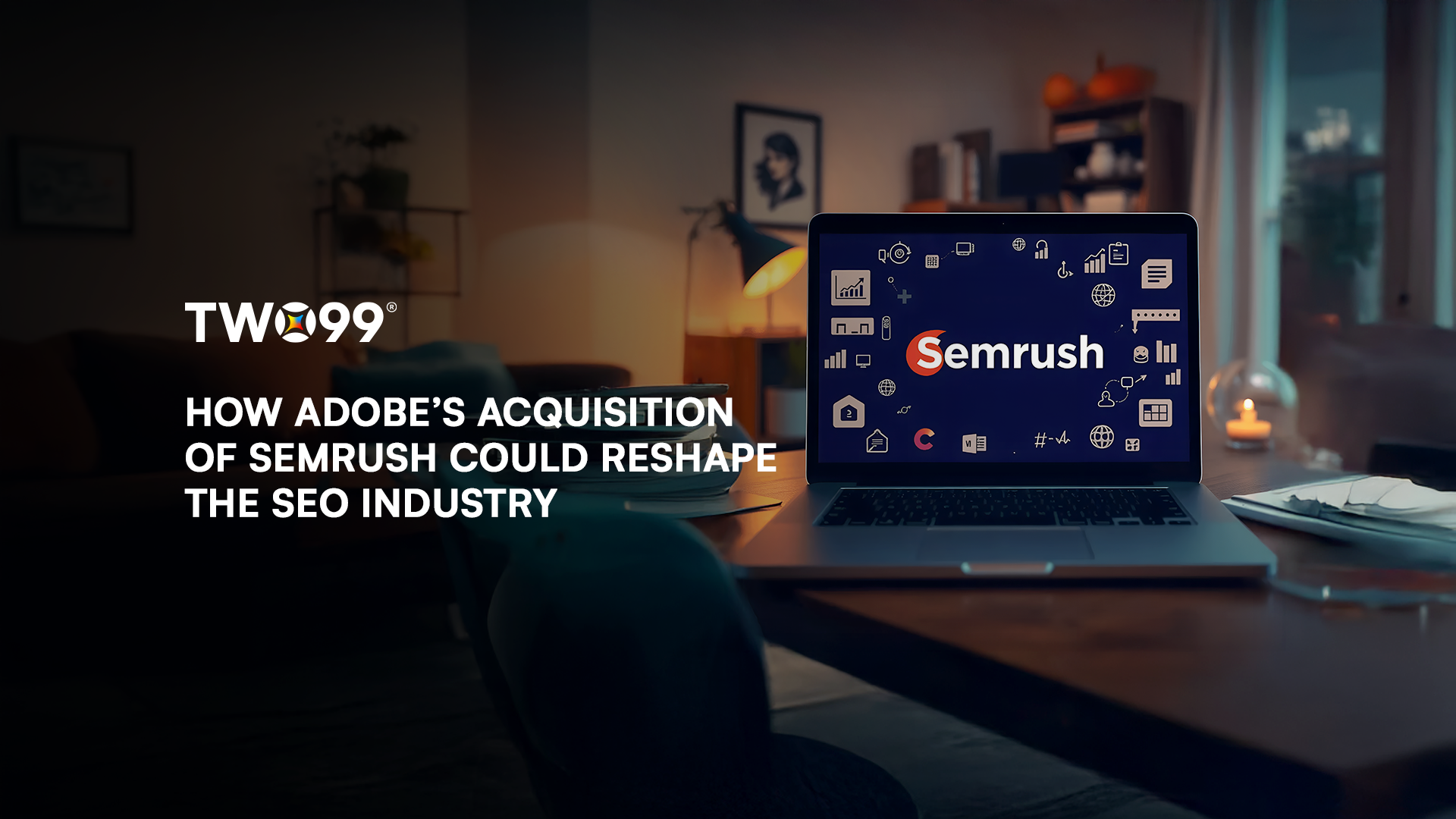
Adobe Inc. announced that it will acquire Semrush Holdings in an all-cash transaction valued at approximately US $1.9 billion, with Adobe paying US $12.00 per share. The deal is a clear signal of Adobe’s intention to bolster its marketing-technology stack by adding Semrush’s visibility and SEO capabilities into its broader enterprise ecosystem.
Semrush has built its reputation as a leading visibility-management and SEO platform headquartered in Boston. It offers tools for keyword research, site audits, competitive intelligence, digital advertising insights and visibility tracking.
In recent years, Semrush has also invested in what it calls generative engine optimization (GEO) that is, tools to help brands remain discoverable not only in traditional search engines but also within large-language models and AI-driven discovery channels.
Under the acquisition terms:
- Adobe will acquire Semrush for US $12 per share in cash, representing a total equity value of about US $1.9 billion.
- The price reflects a premium of roughly 77 % over Semrush’s prior closing share price.
- The deal is expected to close in the first half of 2026, subject to regulatory and shareholder approvals.
How Does Semrush Fit Into Adobe’s Ecosystem Of Experience And Analytics Tools?
Adobe describes the acquisition as a strategic move to support “brand visibility” in what it calls an agentic AI era.
Here is how Semrush’s capabilities align with Adobe’s existing products:
- Adobe’s digital-experience offerings such as Experience Manager (AEM) and Adobe Analytics already provide content supply-chain management, customer-engagement analytics and asset orchestration. With Semrush, Adobe can now integrate visibility insights across search engines, the open web and AI-driven interfaces.
- Semrush’s GEO-tools provide coverage of how brands are referenced or surfaced by large-language models or conversational assistants, enabling marketers to track brand positioning beyond standard search results.
- This combination enables Adobe to present a unified offering: creation and distribution of content (via Creative & Experience Clouds) → measurement of engagement (via Analytics) → visibility tracking (via Semrush).
- For agencies and enterprise marketing teams that already rely on Semrush, this acquisition promises tighter integration with Adobe’s analytics and experience platforms.
Why Does This Acquisition Matter For Marketers And Brands?
- Visibility in a shifting discovery landscape — As consumer behaviour increasingly shifts toward AI-driven assistants and large-language models for queries and recommendations, brands must ensure they remain visible in these new channels, not just on conventional search engines.
- GEO alongside SEO — The concept of Generative Engine Optimization (GEO) is emerging as a complement to traditional SEO. Semrush brings a decade of SEO expertise plus new GEO tools, giving brands a chance to prepare for visibility in AI-first environments.
- Enterprise cross-sell potential — For Adobe, integrating Semrush opens up the opportunity to sell enhanced marketing-visibility workflows to its large enterprise customer base and drive deeper value from its Experience Cloud.
- Agency and workflow impact — Agencies and in-house teams that currently use Semrush will need to monitor how pricing, packaging and independent access evolve once the integration is underway. The day-to-day tools may stay the same in the short term, but longer-term changes are likely.
What Strategic Considerations Should Organisations Keep In Mind?
- Regulatory and operational timeline: The deal hinges on regulatory approval and shareholder consent. Until closing (targeted H1 2026), Adobe and Semrush will continue to operate independently.
- Product-packaging questions: One key question is how Semrush’s offerings will be priced and packaged within Adobe’s stack. Will smaller teams retain access? Will there be integration-fees?
- Integration speed vs. independence: Adobe must decide how quickly to integrate Semrush into its Experience Cloud and how much to maintain Semrush’s brand and product independence. The trade-off is between preserving what made Semrush strong versus capturing synergies fast.
- Competitive signal in martech: This acquisition is part of a broader consolidation trend in marketing-technology. Major players are incorporating search/visibility tools into full-stack suites. Marketers should monitor how the competitive landscape evolves.
How Should Seo And Marketing Teams Prepare For The Changes Ahead?
- If you use Semrush today: Expect your tool workflows to remain largely unchanged in the short term, but keep an eye on announcements around integration, new features and pricing changes.
- If you rely on brand visibility metrics: The acquisition suggests you will soon get deeper insights not just into search engine rankings but into where your brand appears (or might appear) in AI-driven discovery contexts.
- If you aren’t yet leveraging GEO: This acquisition signals that GEO is becoming a serious discipline alongside SEO. Consider auditing how your brand might appear in LLM/discovery surfaces and what visibility gaps exist.
- If you are an Adobe customer: Look for expanded capabilities in your Experience Cloud tools that leverage Semrush’s visibility data – for example, combined dashboards for content creation, analytics and brand discovery monitoring.
Could This Acquisition Redefine How Brands View Discoverability?
The acquisition by Adobe of Semrush for approximately US $1.9 billion marks a major step in the evolution of digital-marketing tools. By integrating Semrush’s visibility insights, spanning SEO and GEO, into its Experience Cloud ecosystem, Adobe is positioning itself to help brands navigate a future where productivity, discovery and engagement increasingly pass through AI-driven channels.
For marketers, the move underscores that brand discoverability is no longer limited to search engines: it now includes assistants, large-language models and the spaces where consumers ask questions and expect answers. The brands that invest in visibility in these environments will be better placed to keep relevance and revenue.
As the deal progresses, teams should stay alert to how the offering evolves, how their contracts and workflows might change, and how they can leverage the combined Adobe-Semrush stack to drive brand visibility, engagement and growth.