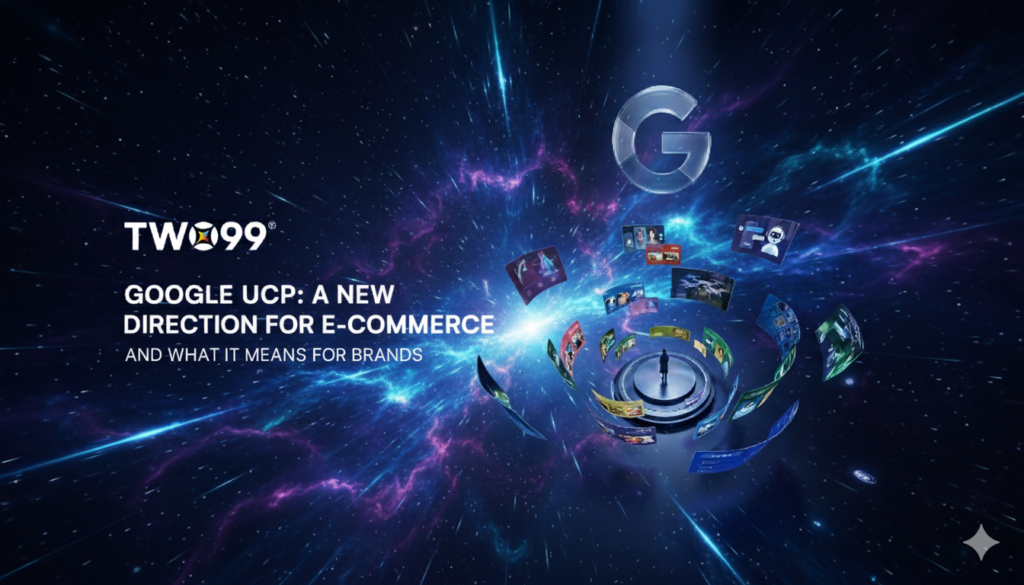
The way people discover products on the internet is changing. Google’s new Universal Commerce Protocol (UCP) marks a major shift in how product information will be read, understood, and displayed across Google’s surfaces. Instead of depending only on websites for clarity, Google is now asking brands to share product data in a structured, universal format.
UCP is not complicated once you understand the idea behind it. It’s simply a cleaner, more organized way for brands to tell Google exactly what their products are, what they do, how they compare, and who they are meant for. This allows Google to show products more accurately across search, shopping, video, maps, and AI-driven recommendations.
How Google UCP Works
Brands today describe products in different ways. Some share complete details, some share very little, and some use inconsistent terminology. This creates gaps in how Google interprets product information.
UCP standardizes all of this.
Instead of Google trying to piece together scattered or incomplete details, UCP helps it receive product information in a clean format that includes:
- core features
- variations
- specifications
- price
- availability
- attributes like size, color, and material
With this structure, Google no longer needs to guess or interpret missing pieces. It fully understands the product from the start.

Why UCP Matters for the Future of Online Buying
For years, buying online followed a simple flow:
- Search on Google
- Open multiple websites
- Compare products manually
- Choose one
- Checkout
That flow is changing.
People now expect quicker answers, clearer comparisons, and instant options.
Google is preparing for a future where:
- comparisons happen automatically
- product details show instantly
- buying decisions happen without website visits
- AI suggests products based on needs, not keywords
UCP gives Google the data structure it needs to support these experiences.
Does UCP Replace Classic SEO?
No, but it moves SEO in a new direction.
Traditional SEO focuses on ranking pages.
UCP pushes SEO toward ranking data.
The brands that supply complete, consistent, and machine-readable product information will be prioritized in AI-driven discovery.
Instead of writing long content and stuffing pages with keywords, brands must focus on:
- accurate data
- complete product attributes
- structured content
- clean feeds
- consistent pricing and stock
This is the next chapter of SEO.
How UCP Changes the Customer Journey
Here are simple examples of how buying behavior will evolve:
1. No-click product decisions
A shopper searches for something like “comfortable sandals for women.”
Google may show options with details, reviews, and delivery timelines.
The user may choose without opening any site.
2. Visual discovery
A person points Google Lens at a backpack.
Google identifies the product and offers purchase options instantly.
3. AI-based suggestions
Someone asks: “Which coffee is good for cold brews?”
Google’s AI recommends products based on their attributes and user preferences.
All of these depend on high-quality product data, not traditional page-level SEO.
What Brands Should Focus on Going Forward
To adapt to this shift, brands must prioritize:
- clear product descriptions
- complete specifications
- accurate attributes
- updated pricing
- consistent inventory information
- a structured, UCP-aligned product feed
- strong schema markup on product pages
Brands that treat their product data as a strategic asset will outperform those who rely only on old SEO methods.
Why Brands Will Need Guidance
As UCP becomes widely used, many brands will struggle with organizing product data, fixing attribute gaps, and maintaining consistency across platforms. Businesses will look for specialized partners who understand UCP formatting, AI-driven discovery, and structured catalog optimization. This growing need will push companies to seek expert agencies that can guide them through these changes.
How Two99 Helps Brands Adapt to This Shift
Two99 supports brands by helping them transition from traditional SEO practices to a data-first commerce approach suited for Google UCP and AI-driven shopping. Instead of focusing only on ranking web pages, we work on cleaning and standardizing product information, building structured data foundations, improving product feeds, and ensuring consistency across catalog and inventory systems. Our approach makes it easier for Google’s AI to understand, match, and display products across Search, Shopping, Lens, Maps, YouTube, and other discovery surfaces. By aligning product data with the way Google now interprets and recommends products, Two99 ensures that brands stay visible, competitive, and discoverable in a world where product clarity matters more than keywords.
Conclusion
UCP represents one of the biggest transitions in digital commerce. Google is shifting from reading websites to understanding products directly. As AI becomes a central part of product discovery, structured and accurate data will determine which brands show up first.
Traditional SEO will continue to matter, but brands that combine strong SEO with high-quality product data will move ahead. Two99 helps businesses prepare for this new landscape by building the foundations needed for AI-driven visibility, structured product information, and UCP readiness.
Brands that act early will have a clear advantage in the next era of online discovery.
Key Takeaways
Google UCP shifts discovery from pages to product data
Structured, accurate product information is essential
AI-driven search and shopping rely on data, not keywords
No-click and instant product decisions will increase
SEO is evolving toward data quality and consistency
Clean feeds, schema, and inventory accuracy matter
Early UCP adoption gives brands a competitive edge